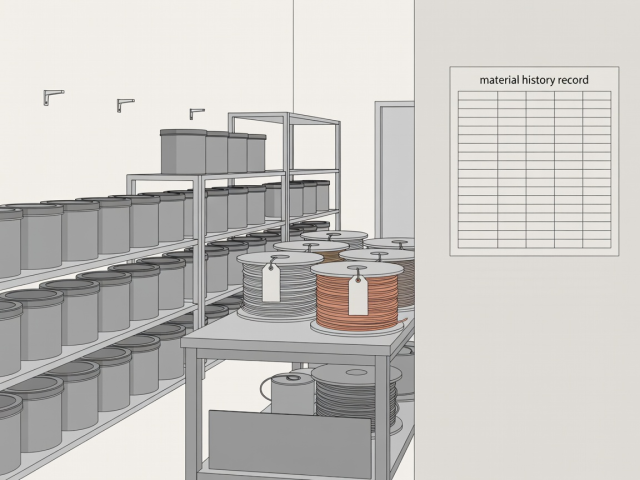
Receive a material, not just a delivery
Incoming control should connect the physical feedstock to a purchase specification and a unique lot identity. Confirm the material designation, supplier, certificate, packaging condition and any applicable storage limits. A certificate of analysis describes tested material under stated conditions; it does not automatically prove that a particular machine will produce an acceptable component from it.
Different applications justify different levels of verification. A development fixture may need a simpler plan than a fatigue-critical component. Decide which checks are necessary through engineering and quality review. Keep quarantined, released and rejected material physically or procedurally distinct so that a hurried shift change cannot turn an unresolved delivery into production feedstock.
Powder condition is more than alloy chemistry
For metal powder, particle size distribution, morphology, flow behaviour and contamination can influence spreading and consolidation. ISO/ASTM 52907 describes methods for characterising metal powders used in additive manufacturing. The useful question is not whether every possible test has been performed, but which characteristics your qualified route controls and how changes are detected.
Powder handling also creates occupational and fire risks that vary with composition and particle characteristics. Consult the safety data sheet, equipment supplier and a competent safety professional. In the United Kingdom, COSHH and DSEAR can be relevant to the risk assessment. Inert gas systems introduce their own hazards, including oxygen displacement; a gas being nonflammable does not make it harmless.
| Feedstock | Control questions | Production implication |
|---|---|---|
| Metal powder | Lot identity, exposure history, sieving and reuse rules | Spreading, contamination and safety management |
| Wire | Grade, diameter, surface condition and storage | Feed stability and deposited material consistency |
| Polymer pellets | Drying conditions, filler distribution and residence time | Bead quality and thermal degradation risk |
| Filament | Diameter consistency, moisture and spool identity | Extrusion consistency and interlayer performance |
Reuse needs a defined history
Unused powder is not automatically equivalent to fresh powder. A reuse strategy may include sieving, sampling, blending with virgin material and limits on exposure or cycles. Those rules should be specific to the material, machine and application. A simple cycle count can be useful, but it may not capture all thermal exposure or handling events.
Keep the material genealogy readable. If a recovered batch combines several builds, the record should make that relationship visible. Record rejected material and disposal as well as successful reuse. Without this information, an apparent improvement in material utilisation may simply move uncertainty into the next production batch.
Wire and polymers need their own controls
Wire-based deposition avoids some powder-handling operations, but it still depends on stable feeding, appropriate storage and verified material identity. Surface contamination, inconsistent wire diameter or unsuitable spool handling can affect the process. Shielding gas specification and delivery should be considered alongside the feedstock, because the deposited material is created within that process environment.
For extrusion, moisture-sensitive polymers may require controlled drying and protected transfer to the machine. Follow the material supplier’s instructions rather than a generic drying temperature. Excessive heat or residence time can damage a compound. Reinforcement also makes properties directional, so a datasheet value from a moulded test specimen may not represent the deposited structure.
Design the facility around clean handoffs
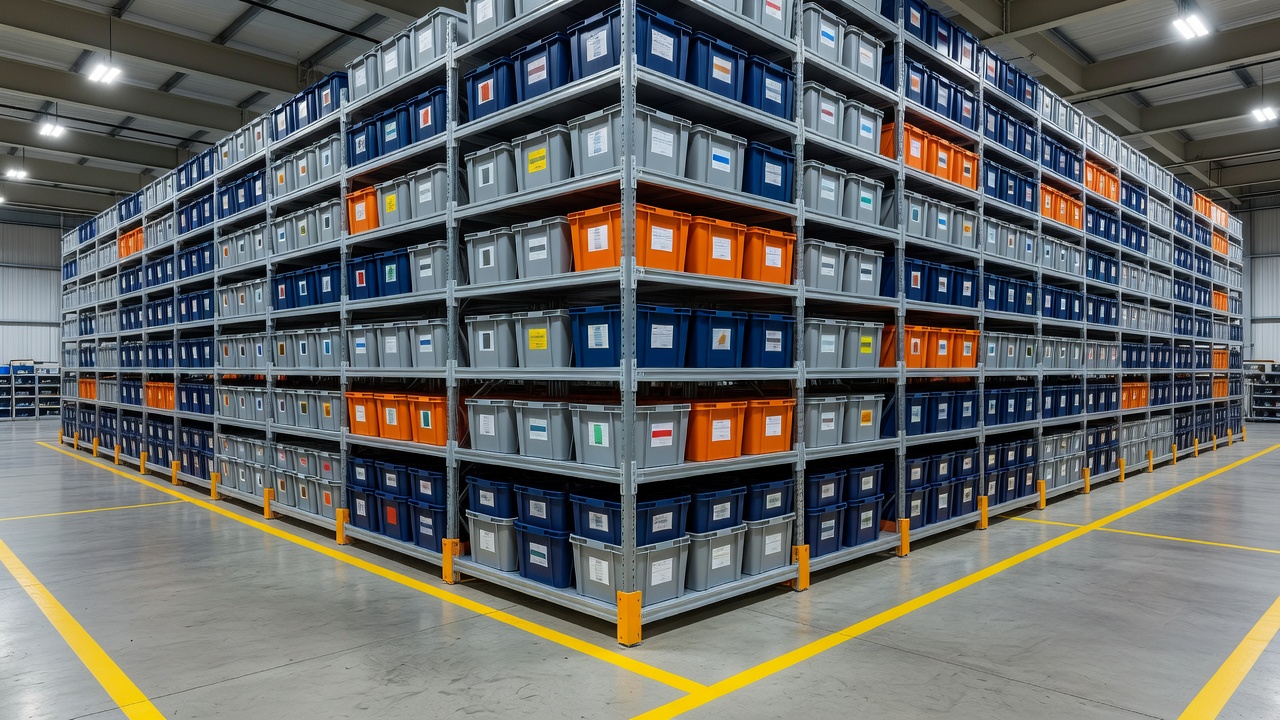
Material movement should minimise avoidable crossings between dirty, clean and released areas. Dedicated utensils, verified cleaning procedures and clear container identification help prevent mixing. Where multiple alloys are processed, ask how equipment changeovers are controlled. Shared handling systems may require more evidence than a visual wipe-down before another material is introduced.
NIST’s additive manufacturing research and ASTM International’s additive manufacturing work provide useful technical context, but neither replaces the facility’s own control plan. For each handoff, define who releases the material, what record travels with it and what happens when the evidence is incomplete. This makes traceability an everyday production practice rather than an investigation performed only after something fails.